

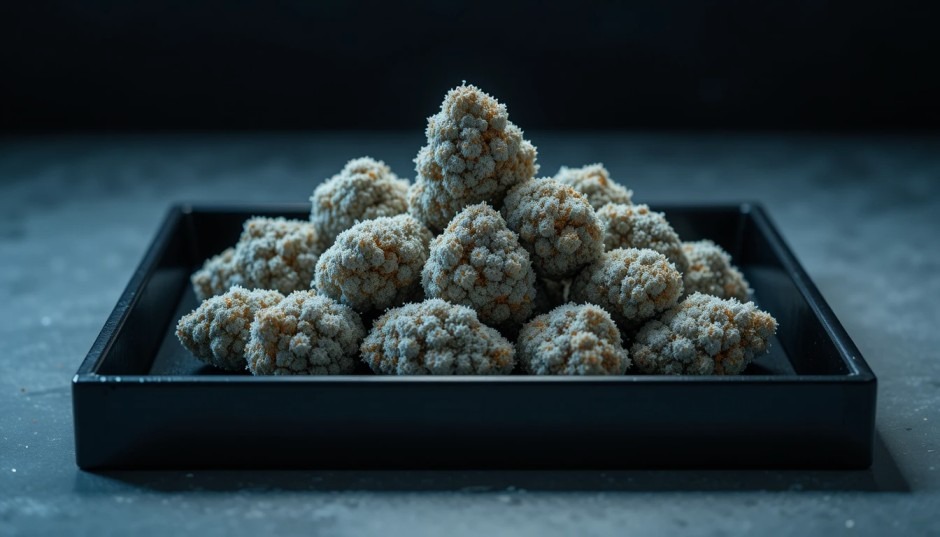
THCA Moonrocks are commonly referred to as”the caviar” of hemp products and truthfully, the name isn’t exaggerated. The tiniest, crystal-coated Nuggets are made for those who value quality, purity and artisanship. However, the highest quality does not happen through chance. It’s the result of meticulous planning, skilled hands and precise manufacturing methods.
Let’s break it down and discover how top-quality THCA Moonrocks are made.
What Are THCA Moonrocks?
In essence, they are a three-layer item:
- High-quality cannabis flower
- A layer of concentrated THCA
- Final dusting of the finest kief
Each layer plays a part in the overall product, and if one layer is not strong, the whole product is at risk.
Why Premium Quality Matters
Top-quality THCA Moonrock collection provides better taste and aroma, with a stronger scent, consistency in potency, and a smoother experience. Insufficient production, on the other hand, causes the appearance of harshness, uneven coating or reduced cannabinoids.
Think of it as making a cake. Cheap ingredients can ruin the taste.
Understanding THCA as a Compound
Importance of Preserving THCA
Premium production focuses on keeping THCA intact. In excess, light or oxygen can cause it to degrade in terms of value and value.
Beginning with high-quality Cannabis Flower
Genetics Selection
Genetics is the foundation of everything. High-end Moonrocks are derived from breeds that have been bred to:
- High trichome density
- Terpene profiles with strong terpenes
- Structural strength
Weak genetics equal weak Moonrocks.
Indoor vs Outdoor Cultivation
The flowers that are grown indoors are often favored due to:
- The light cycles are controlled
- Pests are reduced
- Terpene profiles are a lot more rich
Environmental Control Factors
Airflow, humidity, temperature and CO2 concentrations are controlled as if in a scientific experiment. Precision equals quality.
Cultivation Techniques That Impact Quality
Organic and Clean Growing Practices
Premium producers steer clear of harmful pesticides and synthetic growth stimulants. Clean inputs equal clean outputs.
Nutrient Management
A balanced feeding schedule ensures that the plant produces strong trichomes with no chemical residue.
Avoiding Chemical Contaminants
Cleaning before harvest eliminates the excess nutrients, which improves the taste and smoothness.
Harvesting at the Right Time
Trichome Maturity
Harvesting occurs when trichomes reach their peak of cloudiness. This happens at the time when THCA levels are the highest.
Hand-Harvesting vs Machine Harvesting
Hand-harvesting preserves trichomes. Machines are quicker but they can be rough and can damage the most valuable components of the flower.
Proper Drying and Curing Processes
Slow Drying Techniques
Drying takes time in dark, controlled rooms. In rushing this process, you destroy terpenes.
Controlled Curing Environments
Curing helps to distribute moisture evenly, increasing the aroma and quality of the burn.
Creating High-Quality THCA Concentrates
Solventless Extraction Methods
The best Moonrocks typically use solvent-free methods such as:
- Ice water extraction
- Mechanical separation
These methods help preserve cannabinoids and Terpenes.
Low-Temperature Processing
The low temperature stops THCA from converting to THC.
Maintaining Cannabinoid Integrity
Gentle handling ensures potency remains stable.
Infusing Flowers together with THCA Concentrate
Even Coating Techniques
Each bud is meticulously coated or dipped with concentrate. No loose chunks.
Precision and Consistency
A uniform coating guarantees consistency in potency throughout the piece.
Premium Kief Selection and Application
Full-Spectrum Kief
High-quality kief has healthy trichome heads and not powdery remnants.
Fine Grinding and Dusting Methods
Kief is gently laid on the concentrate layer to give full coverage, without crushing the buds.
Quality Control During Production
Visual and Physical Inspection
Producers check:
- Color
- Texture
- Coating uniformity
Batch Consistency Checks
Each batch is evaluated against benchmarks of quality.
Laboratory Testing and Compliance
Cannabinoid Profile Testing
Tests in the lab confirm:
- THCA percent
- THC conformity
- Potency overall
Contaminant and Purity Testing
Screen tests for:
- Pesticides
- Heavy metals
- Mold
Storage and Packaging Methods
Airtight and UV-Protected Packaging
Light and oxygen are the opponents of THCA. Premium packaging blocks both.
Temperature and Humidity Control
Storage rooms are cooled to keep the freshness.
Skilled Craftsmanship and Manual Production
Small-Batch Manufacturing
Smaller batches offer more control and reduce the chance of making errors.
Human Oversight vs Automation
Machines help, but human judgment ensures excellence.
Transparency and Traceability
Seed-to-Shelf Tracking
Every step is documented from the genetics stage to final packaging.
Consumer Trust Factors
Transparency increases confidence in customers and brand loyalty.
How Premium Production Affects User Experience
Flavor, Aroma, and Potency
Higher quality methods yield more Terpenes and more powerful effects.
Smoothness and Freshness
Clean inputs and slow curing decrease the amount of harshness.
Common Mistakes That Reduce Moonrock Quality
Overheating and Decarboxylation
The heat exposure transforms THCA into THC in a short time.
Poor Storage Practices
Poor storage can dry out moonrocks and reduce the potency.
Future Innovations in THCA Moonrock Production
Advanced Extraction Technology
New low-temp techniques promise more levels of purity.
Sustainable Production Trends
The growing process and packaging that are eco-friendly are influencing the future.
Conclusion
Top-quality THCA Moonrocks come as the product of a combination of patience, precision and fine craftsmanship. From cultivation and genetics through extraction to infusion testing and storage, every stage is important. If the producers adhere to the procedure, the end product will have unmatched power, flavor and consistency. Quality isn’t sacrificed, it’s built.